
Remembered Mercy
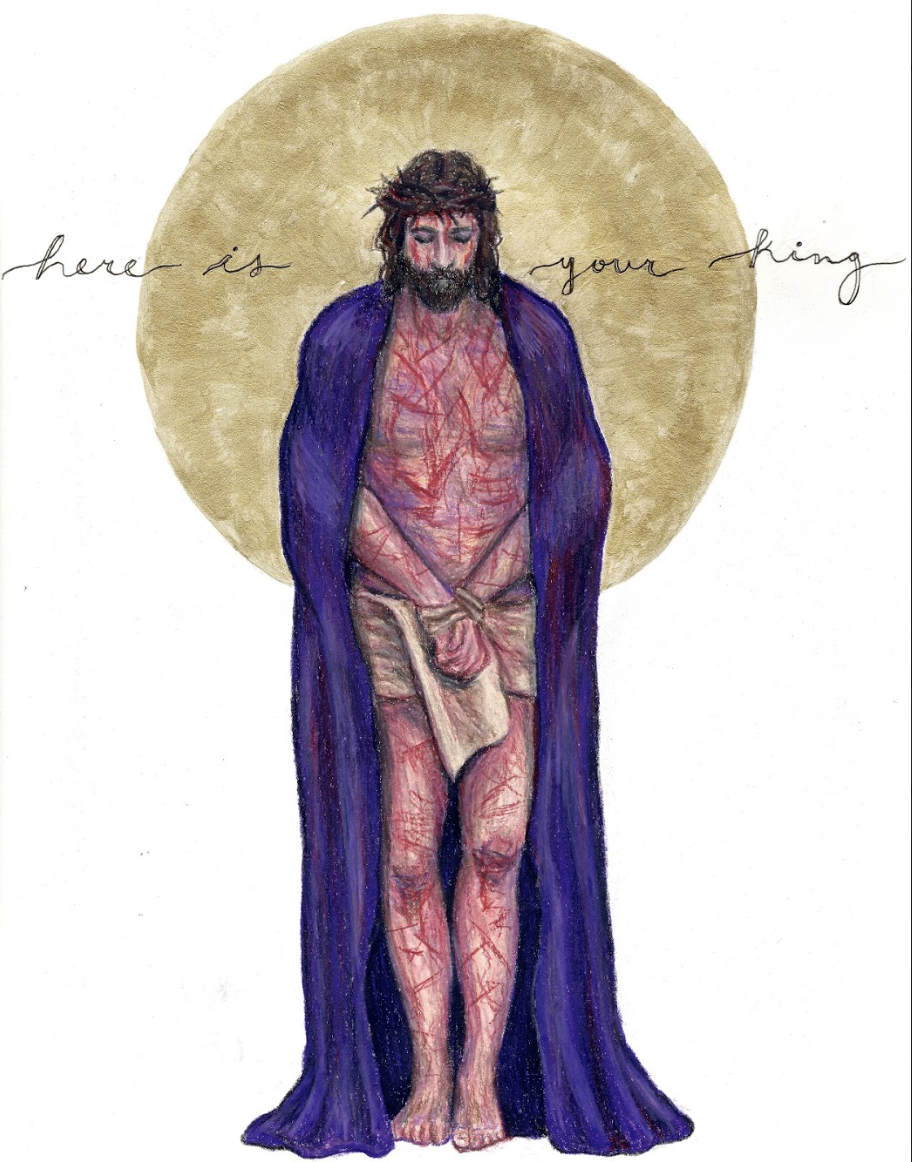
“Here is Your King” By Hanna Briley
Remembered Mercy
By Naomi Leach
Destitution, groanings, death. Our Mass readings are growing gloomier as we draw closer to Calvary.
But according to all three readings for today, that’s not such a bad thing.
The first reading – an account in Numbers of complaining Israelites being bitten by poisonous snakes – sets out not only that sin is deadly, but that the solution is drawing close to the mercy of God.
It’s one of the more poetic and illustrative examples of actual sin in the scriptures. Complaints and murmurings poison the well-being of a community and also end up poisoning the complainer and murmurer themselves. Genuine sharing of lament is one thing, as is speaking your heart’s truth to a trusted confidante or advisor – but whingeing? Who can find relief or peace in a complaining heart?
And so they die in their sins, as Jesus in the Gospel says we’ll do, unless we turn to him to be saved.
And when they do turn to the bronze serpent, set up by Moses as instructed by God, they find that they are greeted not by a mixture of judgment and grudging forgiveness, but only mercy. In many ways, that is the most miraculous part of the account. How often do we – when we apologize to someone, or even go to Confession – hold doubt in our hearts about how we’ll be received?
You get the impression from the Old Testament reading that there were so many snakes that it’s possible the same people were bitten again and again. And so God would heal them again and again, lovingly using their suffering caused by sin to cultivate in them a trust in His mercy and grace.
When Jesus in the Gospel tells his listeners, “Unless you believe that I AM, you will die in your sins,” and they respond, “Who are you?” it’s a telling exchange.
Perhaps there were mixed motives in that question, but for some, there was surely that same question we ask ourselves when apologizing or going to Confession: Who is this one to whom I come? Will I be met with mercy?
When Jesus then references the Israelite memory of the snakes and the bronze serpent, it is more than a technical discourse on how sin is forgiven. It’s a reminder to the people of Israel of who he is, a lesson which can only be learned through experience. Jesus could be saying quite simply: “You know who I AM. I am the one who will meet your sin and suffering with mercy.”
It’s interesting that they don’t seem to be upset that Jesus is calling out their sinfulness. And Jesus also doesn’t seem too upset that they don’t understand the meaning of his relationship with the Father straight away. Instead, he meets ignorance with further mercy, and like the bronze serpent cast in a shape understandable to those who suffer, Jesus links his identity and intention to a memory they could comprehend.
And remembered mercy is powerful. Is there anyone who has shown mercy to us, and we have not loved and trusted them more deeply? It is our actions that define us.
As the Gospel concludes: “Because he spoke this way, many came to believe in him.”
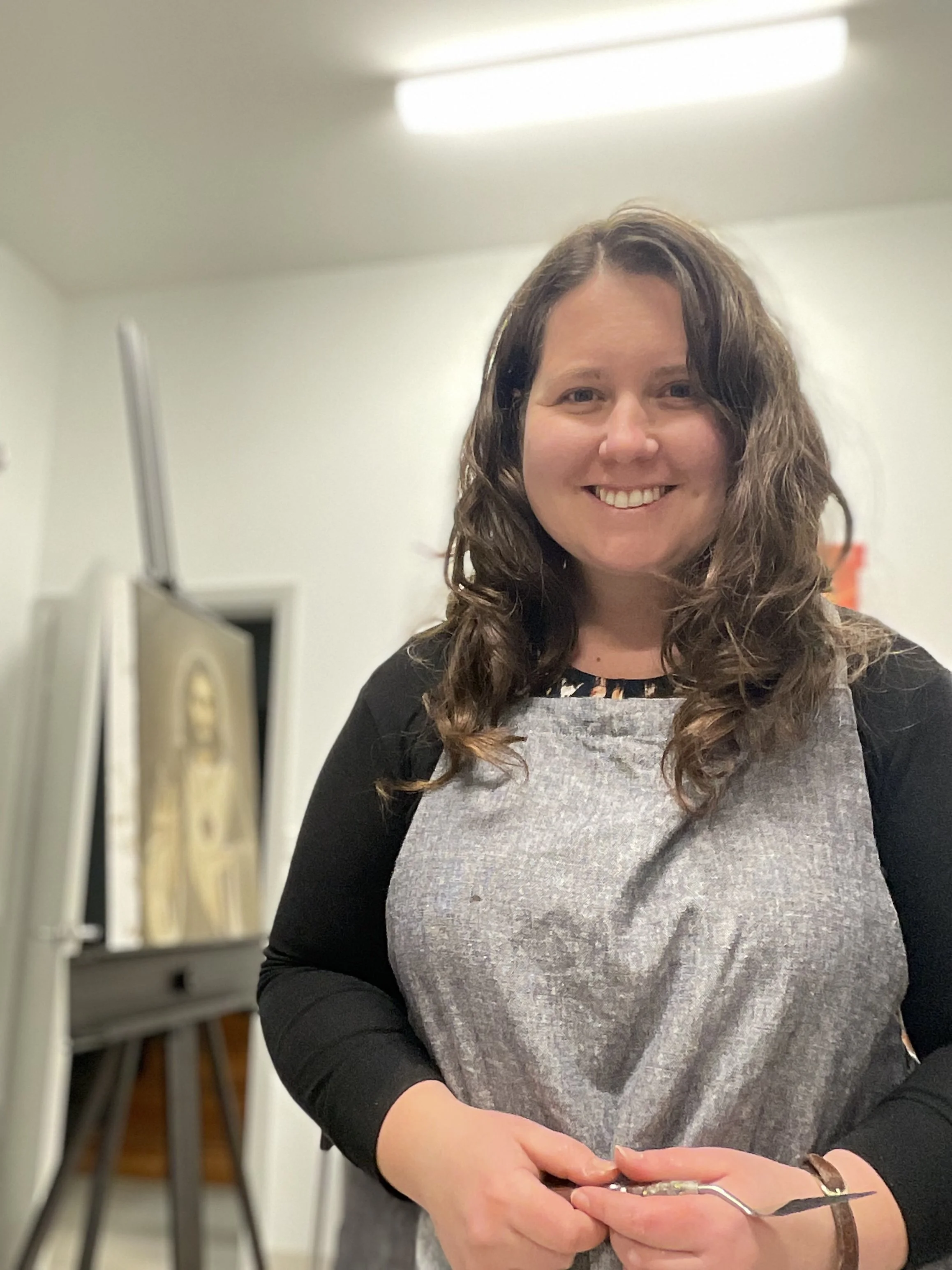
Naomi Leach is a visual artist and writer living in Sydney, Australia who creates in between serving in ministry at her parish. You can find out more about her here.

Hanna Briley is a catholic visual artist, musician, & teacher. She specializes in pyrography, charcoal, & watercolor and is in the process of recording her first album to be released next year.

Nicholas A. Higgins is a bilingual musician and author. Find out more about him at www.nicholashiggins.com