
December 13th, 2025
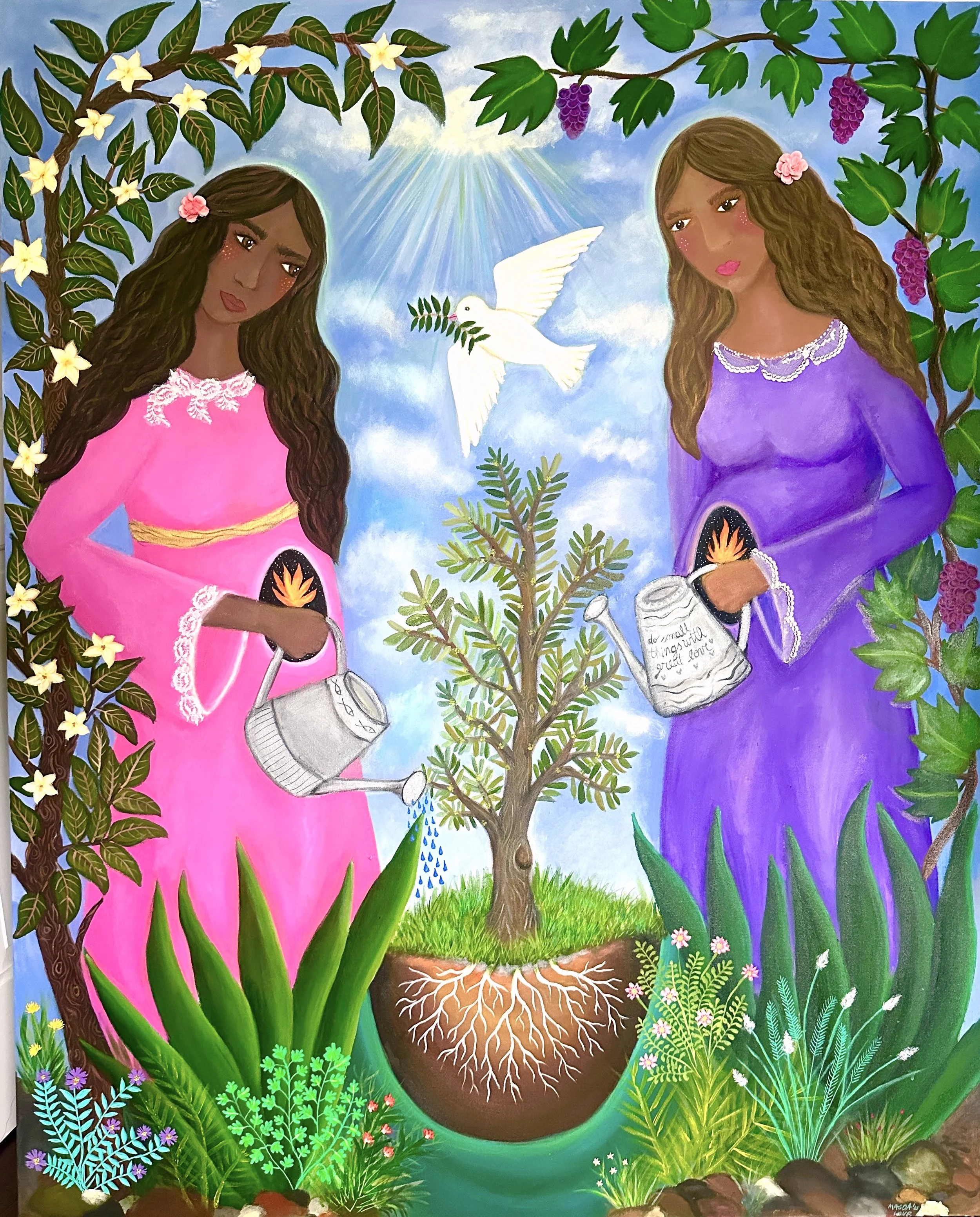
“Guardians of the Divine” - Magda Love
Pondering of Light:
Considering the Wise and the Foolish
By Christine Howson
The light of the world is coming! Let us prepare and call to Him!
The readings today remind us to call out to the Lord who hears us and will bring us close to Him. He will bring us to the best place, the place we need to be.
The Lord is direct and clear: the vision, what to do, and how to get there. This straight path may take some getting used to. It’s the path that isn’t necessarily seen with our natural eyesight. It requires a supernatural sight, sight of the soul. However, being made in the image of God, created by God, we have what is needed to follow this path. We are made to love Him. We have the capacity to see with the eyes of the soul if we rely on Him.
Lord, make us turn to you; let us see your face and we shall be saved. (Ps 80:19)
There is sometimes pressure to think that this path and the steps we take should be more complicated, and thus it becomes a challenge to simply receive the greatest gift of His love and act on this knowing.
I wondered about the parable of the ten virgins and the five who were locked out of the wedding feast. We are told that they were all going to meet the bridegroom. So, why were the five women unprepared, leading them to be locked out? Is it fair? Is it just? Being called foolish implies that they DID know what needed to be done and chose not to do it. This choice seems to have come way before the doors were locked.
Though at first the foolish virgins seemed to be headed in the right direction, could it be that they kept the latch of their hearts tightly locked and away from the Lord, leaving them in spiritual blindness?
The other Virgins knew their purpose when they headed out and knew where to go. How did they know what was needed? Maybe this is the catch. Perhaps they didn’t know much at all, but they knew Him whom they sought and trusted. This knowing is everything! They depended on Him to guide and bring them to the feast. They knew, through Him, the Way, and they did whatever was needed.
I, the Lord, your God, teach you what is for your good, and lead you on the way you should go. (Is: 48:17)
Peter G. van Breeman, S.J., in A Bread that Is Broken, writes about prayer and what can sometimes be misunderstood. “God is not the one who is answering. God is first. I am but a word spoken by God. I am the one who answers.” God first loved us and continues to love us. We are free to receive and respond.
The first step he gives for prayer is to allow yourself to be loved. Necessary is “the realization that I am loved by God as I am. His love is based on nothing, and therefore, is the most basic and secure fact in my life. I simply let myself be loved by God…I let God’s love soak in and permeate my whole being. It is the most restful attitude a person can take and the most fruitful as well.” He suggests remaining on this level until ready to move to the next, which is adoration, the person’s response to receiving the greatest love and communion with the Creator.
The five foolish virgins seem to be missing this part: The deepest love and relationship. God’s love was there, but missing was the willingness to receive and respond. Or maybe there was something for the women to admit; perhaps that they were scared. Perhaps they couldn’t get free of themselves and their locked hearts by themselves. Perhaps they wouldn’t admit their great need or ask Him for help.
The love of the Lord brings the wedding feast even into the moments of waiting if we let Him. This builds anticipation for meeting Him more completely.
Our hope rests in the promise that God can bring anyone at any time into His light and Love, no matter the darkness or confusion that seems to encompass them. And thankfully, no matter how foolish or distant I may be at times, He is there and waiting to bring me back.
Relying on thy goodness, O God, we humbly ask Thee, by the intercession of Thy servant, Saint Lucy, that Thou wouldst give perfect vision to our eyes, that they may serve for Thy greater honor and glory, and for the salvation of souls in the world, that we may come to the enjoyment of the unfailing Light of the Lamb of God in paradise.
Christine Howson is based in Michigan. You can write to her at christine.howson@gmail.com
Magda Love (Maria Magdalena Marcenaro) is a Catholic visual artist and muralist whose work celebrates the gift of creation as a participation in God’s divine purpose. Drawing on Marian imagery, spiritual symbolism, and the poetic beauty of her Latin American roots, she explores themes of motherhood, light, and devotion in her large-scale public art, community projects, and exhibitions.