
Loveliness in the Desert
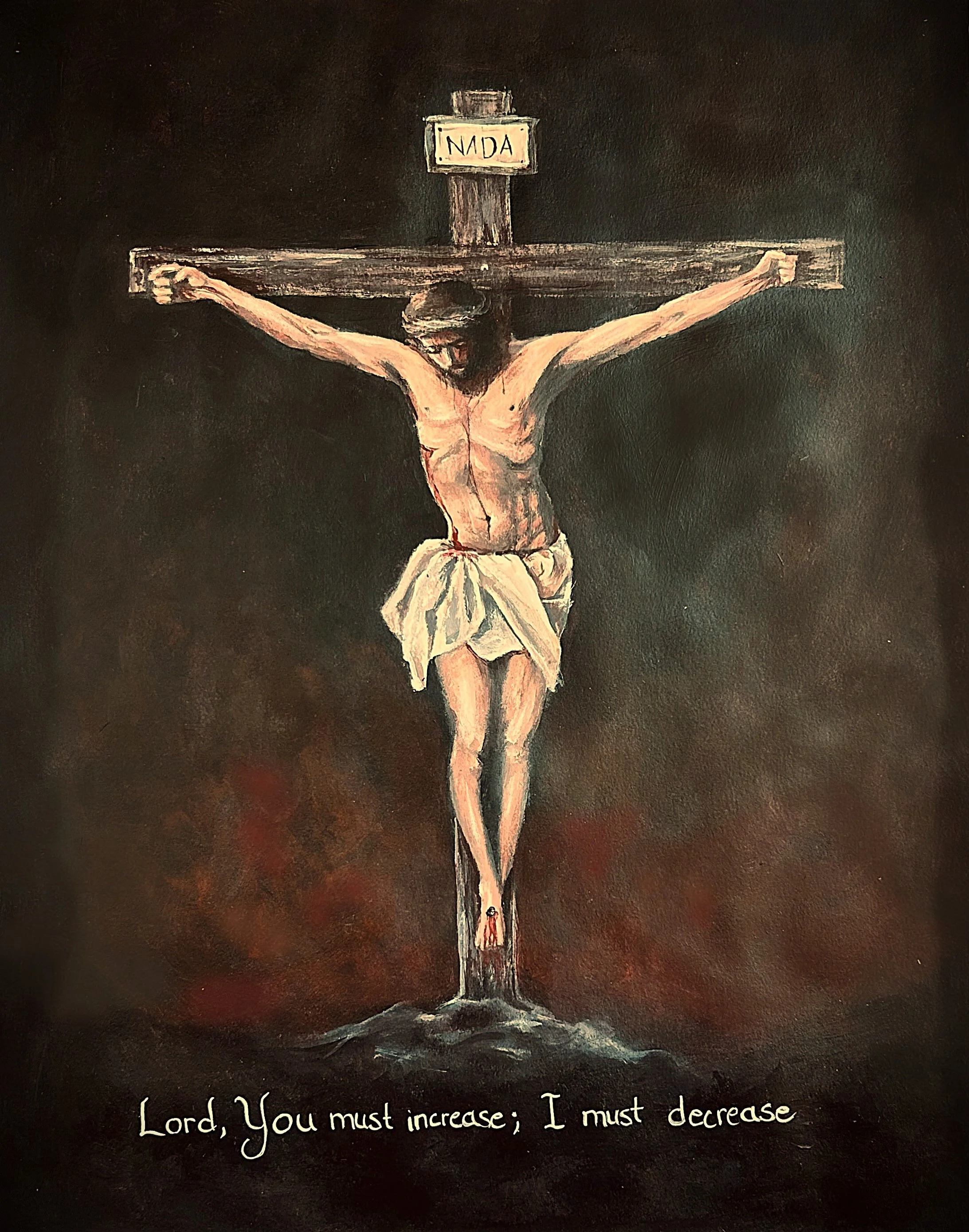
“Crucifixion, After St. John of the Cross” By Rebekah Balick
Loveliness in the Desert
By Rebekah Balick
I often struggle with simplicity. The artistic part of me has always yearned for the baroque and the grand, the lyrical and the beautiful, and when we enter the somber days of Lent, I miss it. I feel the lack of beauty, longing for its emotional stirring as we enter into a strange fast from all things splendid. The great statues and most beautiful liturgies are set aside. The organs fall silent. Our most intricate vestments, our most lovely altar cloths, feel inappropriate for this season of reflection, penance, and silence. All we are left with is the cross.
Why so? The aesthetic tradition of the Church has been cultivated for centuries to draw our souls, which so yearn for beauty, closer to our Creator in art and song. Why, in the season when we are supposed to be going deeper into prayer, do we deprive ourselves of their aid?
I have always resisted this emptiness, wondering why we would be satisfied with the simple when our God created our souls to love and create beauty. I was lonely in it, even afraid of it, without realizing that in fact emptiness is the very point. Even beauty, when loved for its own sake, clouds our souls and poses a barrier between us and God. The Lord loves the simple and the small just as much as he loves the grand and awe-inspiring. And He Himself has deigned to take on simplicity in addition to His grandeur—the simplicity of poverty, of human flesh, of bread and wine. If He can embrace both, so should we.
Michaelangelo, in a sonnet he wrote at the end of his life, lamented that in his obsession with his creative genius, he had loved art and beauty more than Art itself, Beauty itself. As artists, many of us risk falling into the same error. In this season, we must embrace this holy simplicity and find the loveliness in the desert. Deprivation of visible beauty opens us to beauty of another kind, one that is uncomplicated and empty of distraction, because we are forced to find God in our own hearts and in the hearts of others. Sacred art and the Church’s rich history of beauty are vitally important for the salvation of souls, but even then, they are not the Church herself; they are not Christ Himself. He is just as much God in the Eucharist of imposing cathedrals as He is in the Eucharist of mission churches or hospital chapels. Find Him there, without the aid of beauty. Find Him in the silence, in the churches veiled and unadorned.
If you have not made space for this simplicity, consider taking this last part of Lent to do so. Remove from your walls your pictures and paintings. Use simple blankets and wear simple clothes. Set aside the pleasure of lovely things and delve into the beauty of simplicity. Like any other fasting, let it open yet another space for God to fill with His love. Embrace the hollowness and let God reveal Himself in its place.
When Easter comes, we will find joy again in the comfort of our images, just as the Apostles and the Blessed Virgin found comfort again in the sight of their Savior’s resurrected body. By “fasting” from the richness of our beautiful lives for a time, we prepare even more deeply to experience his resurrection in our hearts. Besides, everything here in this world pales in comparison to God’s glory; practicing this will help us see him more clearly, love him more deeply, and thereby know and recognize even more beauty wherever we encounter it again.
Rebekah Balick is a writer and artist based in Alexandria, Virginia.