Practice Resurrection
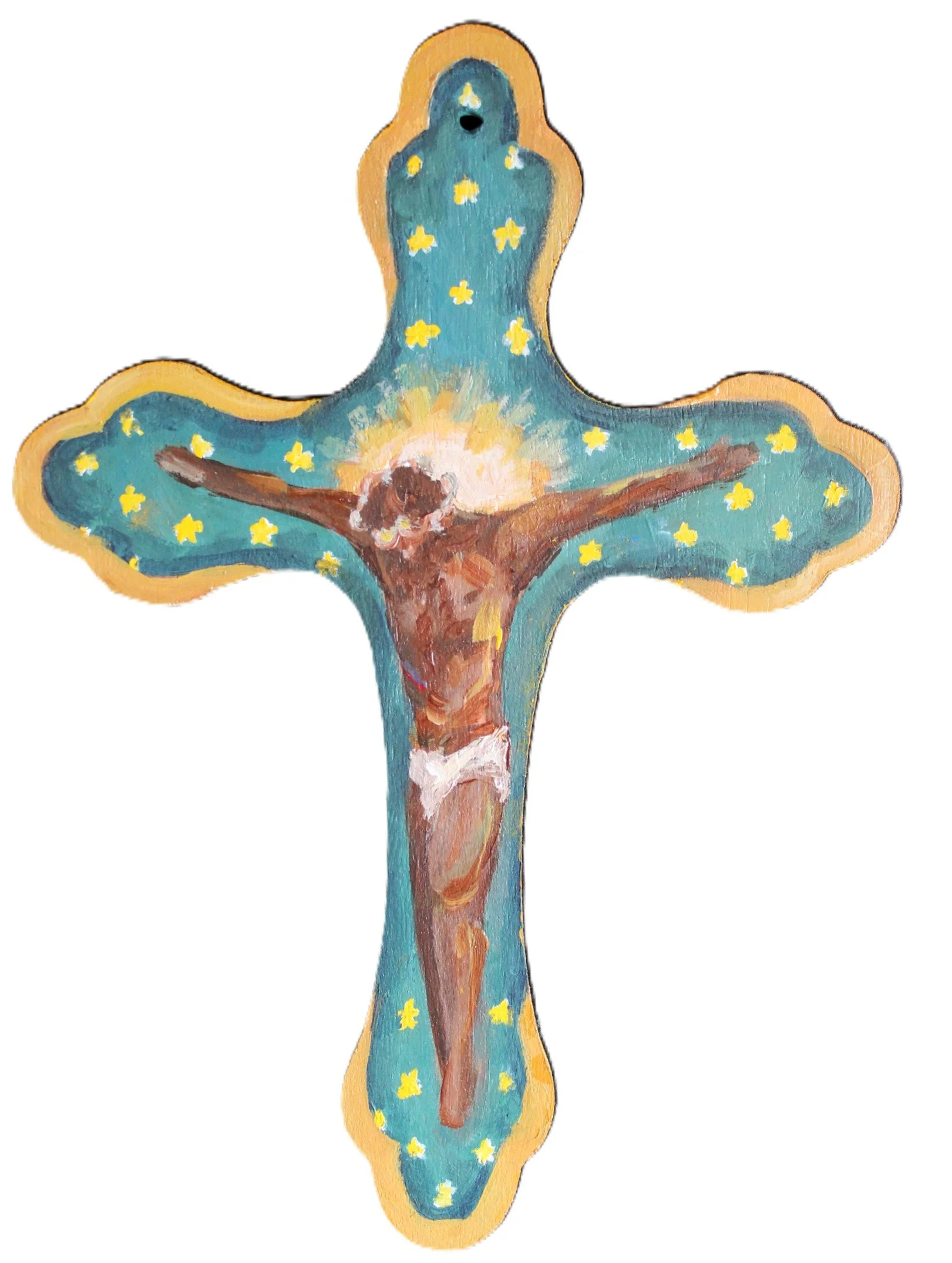
“Guadalupe Cross” by Erin-Lara Forsythe
Practice Resurrection
By Renée Roden
In the world of digital bread and virtual circuses, my Lenten practices usually circle around unplugging, switching the phone off, and touching grass. This year, I’ve been practicing the same digital fasts, through focusing on a positive alternative. Instead of falling asleep to a nightly television show, podcast or binging Saturday Night Live clips on YouTube, instead I remind myself end my day with prayer—a short examen—and journaling, reflecting or reading.
I swear off the noise and bright blue light, because I want to live my life, not just observe life passing by on a screen. I practice being a “protagonist of history,” to use Pope Francis’ phrase. Our Catholic Worker community has been practicing solidarity together this Lent. We are wearing fake “ankle monitors” in solidarity with a fellow parishioner who had one placed on her at an ICE check-in, and 30,000 other immigrants who are wearing them. This practice of solidarity has been an incarnational embrace of a real life “torture device,” as my friend Martha Hennessy called it. It’s been a stark reminder that the crucifixes hanging around our necks and in our churches are images of torture. They are not sanitized religious symbols—they depict a torture reserved for non-citizens of the Roman Empire, for those without state-sanctioned rights. And we believe that, by God’s undergoing that suffering, we have been saved.
Being alive means being in history, walking with those who are bearing Christ’s torture today. It means responding to the changes of the world with discernment—seeing and reading the signs of the times. Pope Benedict XVI describes the incarnation as Christ “entering into history,” suffering and walking alongside each of us in our various crosses.
At the same time, we—the Baptized—live beyond history. In Jesus of Nazareth, Volume Two, Pope Benedict XVI calls Resurrection a “qualitative leap in world history.” The Resurrection is not just another step in the slow march of the unfolding story, it is a burst of divine action upon the scene. Through baptism, Benedict says, we enter into this life of God, beyond the realm of human action. Christ opened up a way to new life with God through the Resurrection, leaving, Benedict wrote, a footprint in history.
Even in the wicked whiplash weather we’ve been experiencing, spring is a call back to reality, an invitation to step outside. I sit on my back porch to monitor the cardinal, chickadees and sparrows exploring the back tangle of trees. I tend more carefully to our backyard chickens, cleaning out their coop diligently rather than scratching by with the bare minimum to make it through the winter. Spring calls us back to a reality that repeats this death and resurrection each year in startling, joyful variety: the daffodils are blooming, the tomato seedlings are sprouting, a small Flaming Katy my friends gave me last January is finally blooming in our living room, after a long year of tender watering.
Resurrection—an extraordinary occurrence that only happened once, an historical matter we enter into again and again, and a regular, daily rhythm of the world, baked into Creation, something we can set our watches, our calendars, or our liturgies by.
In a candlelit church, a small baby is carried by parents to a baptismal font. “I do,” the church congregation repeats six times, reminding themselves that their a lives are lived in Resurrection each day. The fig tree is budding after a cold, dead winter. The garlic is sprouting the garden bed. Downtown, a social worker comforts an undocumented mother crying over the child the state has taken from her. Three women stand by her, with nothing to offer but their presence. We are practicing Resurrection, all of us.
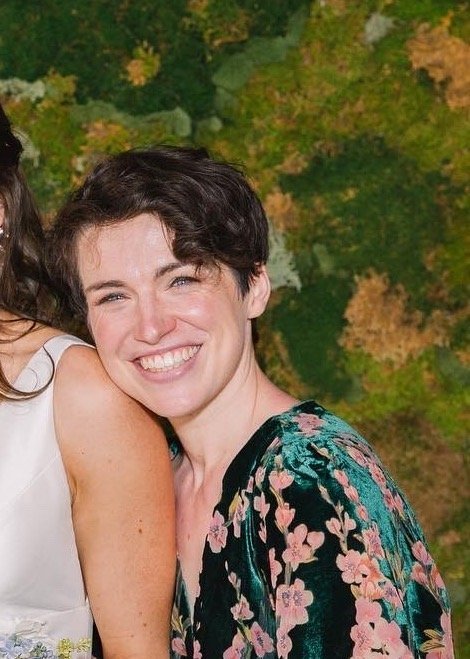
Renée Roden is a freelance journalist and fellow at the Jesuit Media Lab. She is the editor of Roundtable, a newsletter covering the Catholic Worker movement and lives at the St. Martin de Porres Catholic Worker in Harrisburg, Pennsylvania.
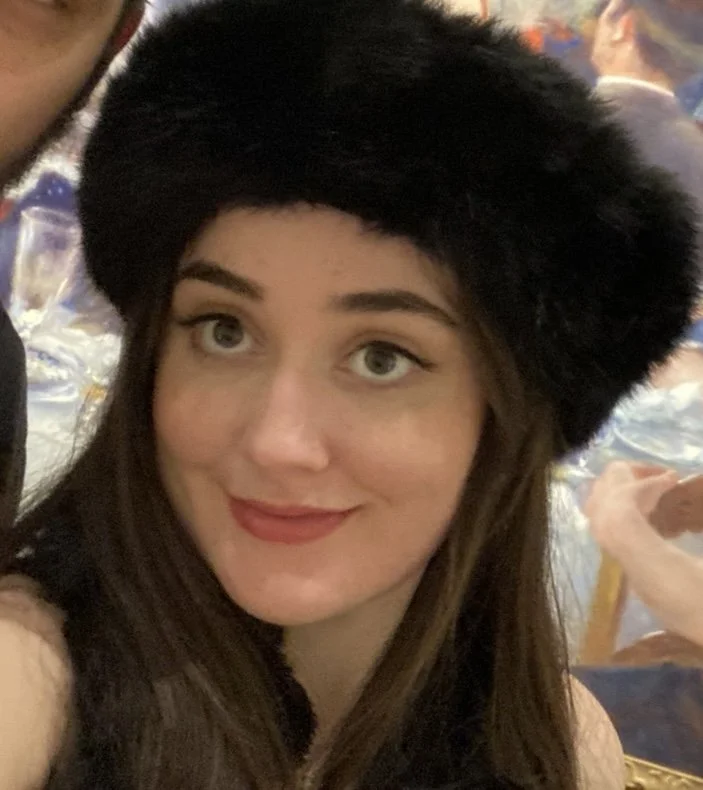
Erin-Lara Forsythe is a sacred art painter. She works in oil, acrylic, and mixed media, depicting the mystical traditions of the Catholic faith. See more: www.erinlara.com